How to Get Started with Spun Cotton: A Beginner’s Guide to Learning the Craft the Right Way
By Katya, founder of mr.scrooger — maker of heirloom spun cotton ornaments Last updated: 2026
Quick answer: To get started with spun cotton the right way, learn the technique from one maker whose finished work you genuinely love, rather than piecing it together from free mini-tutorials that leave out the crucial steps. Begin with a small base palette of paints — white, black, yellow, blue, red, flesh, and brown — and mix your own colors. Expect your first five to ten figures to look rough. That is normal, and it is part of learning to feel the cotton.
What spun cotton actually is
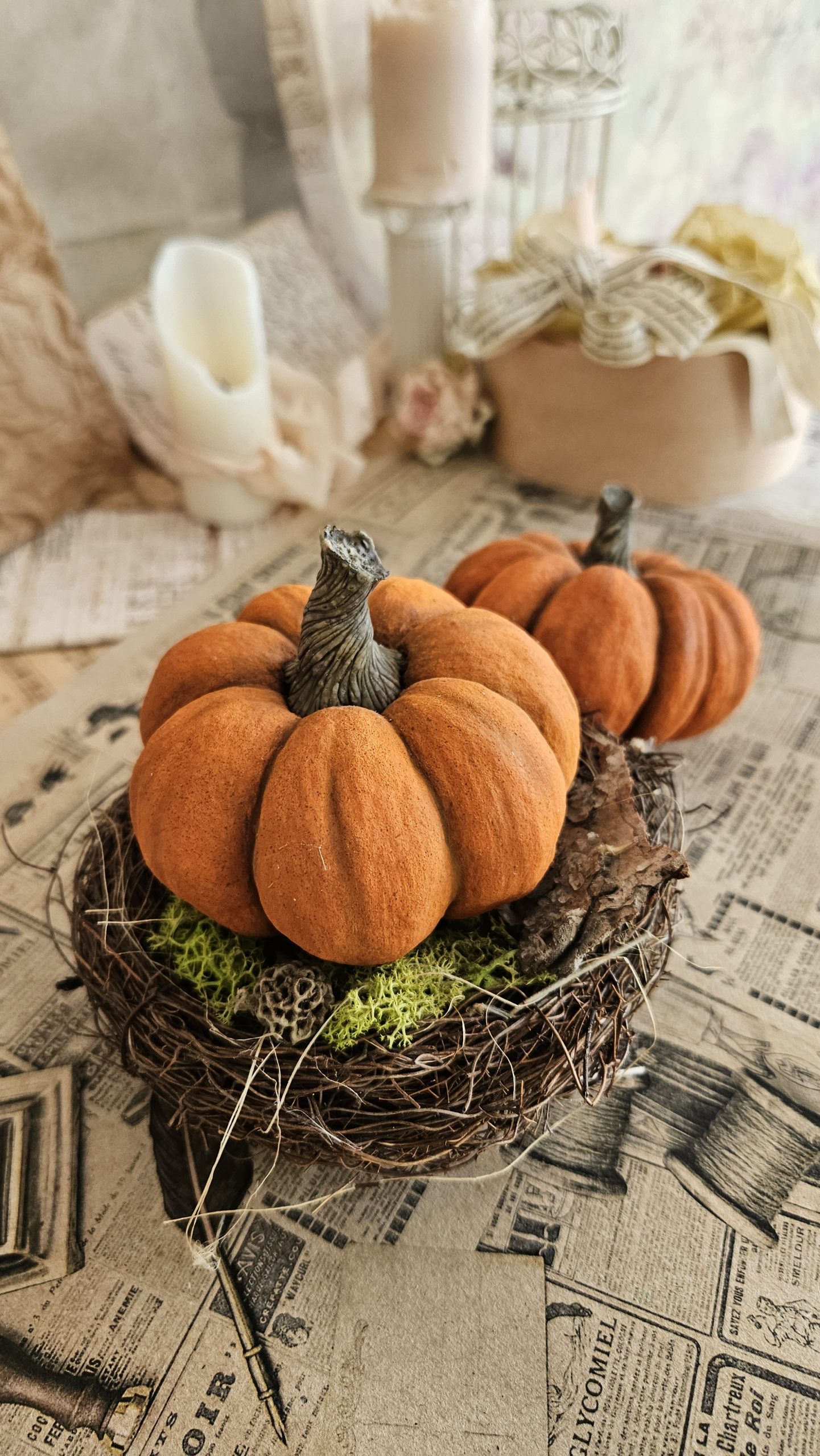
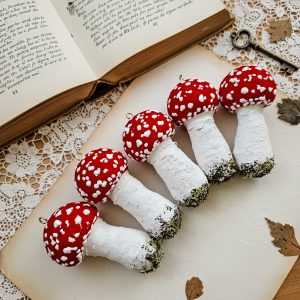
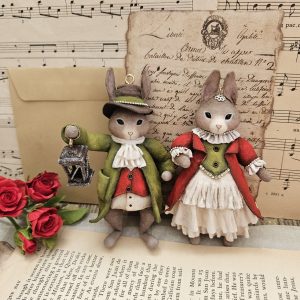
Spun cotton — sometimes called cotton batting art — is one of the most rewarding handmade crafts you can pick up, and one of the few with almost no true equivalent. You build a small figure over a simple wire armature, wrap and shape soft cotton around it, seal it, and then paint and finish it by hand. The results are those cozy, nostalgic ornaments — mushrooms, fruit, snow babies, little characters — that look like they were pulled straight out of a Victorian Christmas box.
The craft dates back to 19th-century Germany, and there’s a rich story behind how it faded and later came back into fashion. This article, though, is about something more practical: how to actually begin, so that you don’t spend your first months learning the wrong habits.
The most important decision comes before your first ornament
If you are a hands-on, creative person, the temptation is to jump straight in. Resist it for one moment, because the single most important choice you’ll make is how you learn the technique — not which ornament you make first.
Here is why this matters more than it seems. Spun cotton looks simple — cotton, wire, glue, paint — but underneath that simplicity is a real technique made up of many small nuances: how you unroll the fiber, the angle and pressure you use to press the cotton onto the armature, how you seal it so the surface stays smooth instead of lumpy. Miss a few of those details and the figure simply won’t come out the way you pictured.
The two problems with free mini-tutorials
You can find plenty of free spun cotton mini-tutorials online, and they’re a lovely way to get a feel for the craft. But if your goal is to make beautiful, finished work, they come with two honest limitations.
First, the crucial nuances are often left out. Free tutorials — understandably — tend to show the overall process while quietly skipping the small details that actually make or break the result. In a huge share of cases, the very steps that separate a clumsy figure from a beautiful one are the ones that don’t make it into a short free video. So you follow along, and it almost works, and you can’t quite tell why it didn’t.
Second, every maker’s technique is different. There is a general method for how spun cotton is made — and then there is each artist’s own way of doing it in practice, built up over years of their own trial and error. Because this is an art and not a rigid trade, there are no fixed rules, which is wonderful — but it also means the free technique you happen to find may be nothing like the style you actually want to make.
Learn from the maker whose work you love
This leads to the most useful piece of advice I can give a beginner: learn the technique from someone whose finished work you genuinely love.
The reason is that retraining is hard. Whatever method you start with tends to stick with you for a long time — your hands get used to pressing the cotton a certain way, at a certain angle, with a certain pressure. Later, even if you know a “better” method, or you watch another artist’s process from start to finish, you may find you simply can’t reproduce it, because your hands are already trained in your first technique. As in many skills, it’s far easier to learn it right the first time than to unlearn it later.
The good news is that the materials for spun cotton are so inexpensive that this is an easy problem to solve. The cost of getting started is low enough that anyone can afford even a simple, affordable class or kit from the specific maker whose style they admire. From your very first figure, you’ll be building habits that lead toward the ornaments you actually want to make.
A quick test you can do right now: open any free spun cotton tutorial and look only at the finished piece. Do you love it? If yes, that method may be a good fit for you. If the final result doesn’t appeal to you, don’t start there — you won’t be happy with your own version, and you’ll likely give up before the craft has a chance to click.
Give yourself permission for the first ten to look rough
One more thing every honest maker will tell you, and almost no beginner wants to hear: your first five to ten figures will not be pretty. They will not look like the ones that made you fall in love with the craft, and that is completely normal.
Cotton is a material you have to feel. You can’t read your way to it — you have to make a handful of pieces before your hands begin to understand how the fiber behaves. Those first practice figures are how you earn that feel. Nobody gets it right on the first try, so plan for those early attempts as practice, not as failures. Once you stop expecting perfection from figure one, the whole craft gets a lot more joyful.
The starter supplies that actually matter
Spun cotton is a craft of many small supplies, but one category matters more than the rest for the look of your work: your paints.
My advice is to resist buying a big box of pre-mixed colors. Instead, start with a small base palette and mix everything else yourself. These base shades are enough to build almost any color — including colors you won’t find in even the most expensive branded set, because you mixed them yourself.
The base palette I recommend for beginners:
- White
- Black
- Yellow
- Blue
- Red
- Flesh / skin tone
- Brown (technically optional, but it appears in so many figures that keeping a ready-mixed jar saves you from remixing it constantly)
That’s it. I have three large boxes of paint, and in practice I use almost only these colors, because mixing your own shades by hand gives the richest, most characterful results. A beginner who learns to mix from these seven will out-paint someone with a hundred pre-made tubes.
Your first steps, in order
- Find a maker whose finished work you love and plan to learn their technique — a simple paid class or kit is worth far more than a dozen scattered free videos.
- Gather a minimal supply kit, prioritizing the seven-color base paint palette above.
- Make five to ten practice figures with zero pressure on the outcome — this is how you learn to feel the cotton.
- Then choose your first “real” ornament and enjoy it.
Once the craft clicks, spun cotton becomes wonderfully open-ended — mushrooms, fruit, holiday houses, little characters, whole heirloom collections. But it all rests on that first decision: learning it properly, from the start.
Frequently asked questions
Is spun cotton hard for beginners? Not to start — the materials are cheap and forgiving. What’s hard is learning to feel the cotton, which takes a handful of practice pieces. Expect your first five to ten figures to look rough; that’s a normal part of the process, not a sign you can’t do it.
What supplies do I need to start spun cotton? At minimum: cotton batting or cotton fiber, wire for the armature, glue to seal the surface, and paint. For paint, a base palette of white, black, yellow, blue, red, flesh, and brown lets you mix nearly any color you need.
Should I learn spun cotton from free tutorials or a paid class? Free tutorials are great for getting a feel for the craft, but they often leave out the crucial small steps, and every maker’s technique is different. If you want a specific look, learn from the artist whose finished work you love — retraining your hands later is much harder than learning it right the first time.
Do I need expensive paints for spun cotton? No. A small base palette that you mix yourself produces richer, more original colors than a large box of pre-mixed shades — and costs a fraction as much.
Want to learn spun cotton in a style like the heirloom figures at mr.scrooger? Explore our masterclasses to learn the full technique from the first figure.
Leave a Reply