Imagine spending an evening doing something you love — and waking up the next morning to find yourself booked solid for a year. Sounds like a dream? That’s the everyday reality for cotton sculpture artists who decided to turn their hobby into a business. Lately, I’ve been receiving more and more messages from my students saying they want to use this craft not just for the joy of the process, but as a genuine handmade side hustle — a real source of income. So I decided to address this topic properly — share my experience, give concrete advice, and offer my honest perspective.
Why Right Now Is the Best Time to Find Alternative Income Ideas
We all see what kind of world we’re living in. It’s unstable, unpredictable, and that’s not going to change overnight. And that’s precisely why now is the right time to look for alternative income ideas — not because it’s trendy, but because it’s smart. Having something of your own that generates income regardless of external circumstances is no longer a luxury. It’s a necessity.
Cotton sculpture is one of the most accessible home-based business ideas for women — and for anyone, really — who wants to build something creative, flexible, and genuinely profitable. Let me explain why.
Why Cotton Sculpture: 4 Key Arguments for Starting a Craft Business from Home
Cost of Materials — Almost Zero
This isn’t an exaggeration, and it isn’t marketing talk. I have over 20 years of experience in handmade crafts and I’m proficient in a wide range of techniques and skills — from making candles and soap all the way to realistic cold porcelain flower sculpting. And I say this with full confidence: cotton sculpture art has the lowest material cost of any craft I have ever worked with.
The core materials are ordinary inexpensive glue and standard pharmacy cotton wool. You’ll also need brushes and paints, but these are bought infrequently and cost very little. If you calculate the material cost of a single toy, it can come out to under one dollar — sometimes well within that range. Meanwhile, finished handmade cotton dolls and figures sell for entirely different prices. For a handmade business, that gap is everything.
Unlimited Possibilities from a Single Material
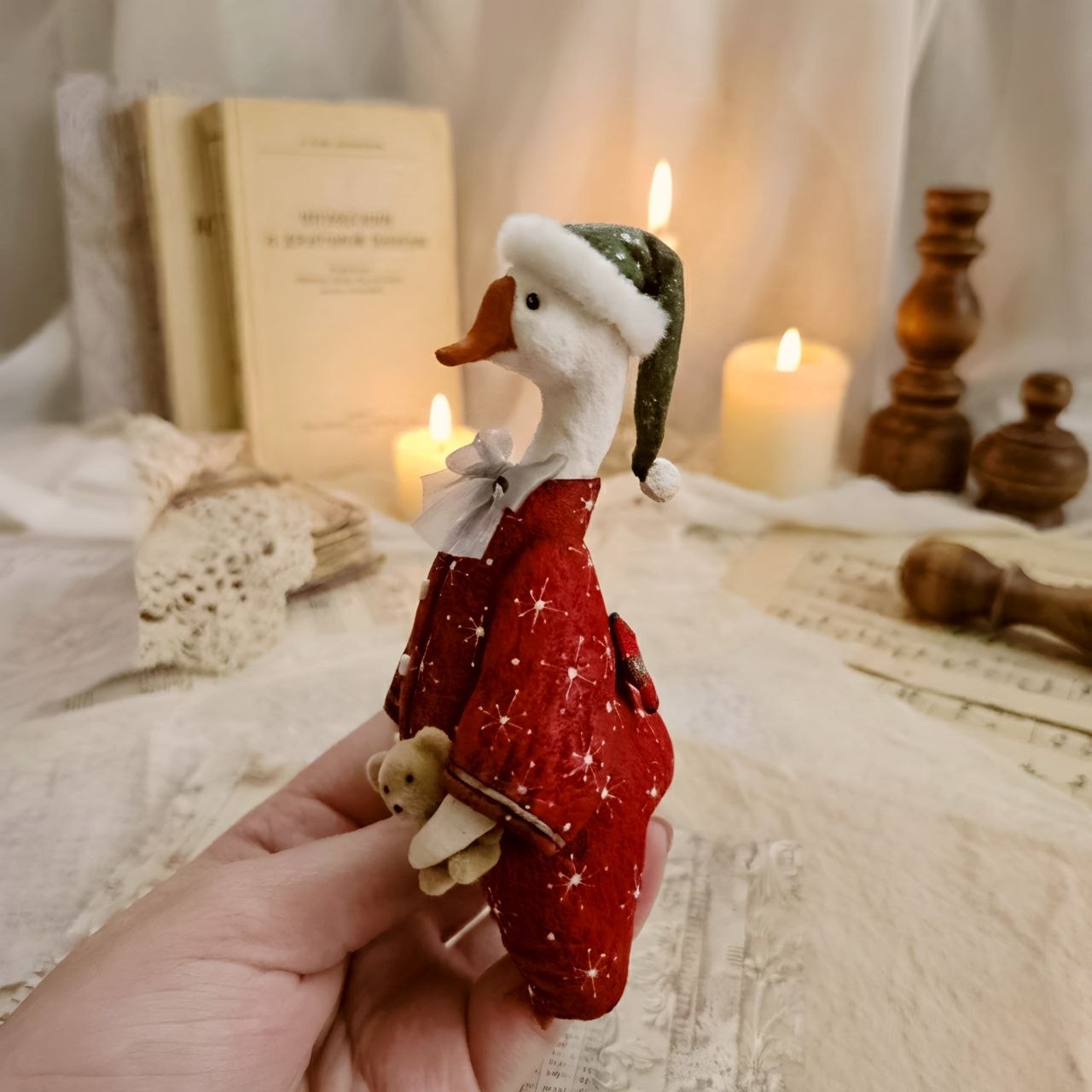
You can make absolutely anything from ordinary cotton wool — and that is not an overstatement. People, animals, clothing of any style, furniture pieces, miniatures, flowers. DIY cotton toy making covers literally anything your imagination allows.
Compare this to sewing stuffed toys or Teddy bears. To create a toy and dress it in clothing, you need a vast supply of different fabrics and furs in a wide variety of colors and textures. That requires significant upfront financial investment and, at minimum, the ability to sew. With cotton wool art for beginners and experienced makers alike, none of that applies. You create clothing of any style in any color using nothing but a brush and glue. No sewing machine, no fabric stockpiles — just cotton, glue, and your hands.
No Art Degree, No Talent Required
This is one of the questions I get most often: do you need to be an artist to start making cotton sculpture toys? My honest answer: I am not an artist myself. I couldn’t draw a simple cat or dog on a piece of paper if I tried. I have no drawing skills whatsoever. And yet that has never been an obstacle to creating complex, detailed spun cotton figures.
Cotton sculpture doesn’t require talent — it requires experience. Cotton is an unfamiliar medium. You have to get used to it, develop a feel for it. I call this “getting a sense of the cotton.” It’s a matter of practice, not innate ability. There are specific cotton art doll techniques, a clear sequence of steps, defined rules — what to do, why you do it, how to layer the cotton, how to apply it correctly. Once you learn these, the results become predictable and repeatable.
A Growing Market That Isn’t Saturated Yet
Spun cotton art as a niche is relatively new, and demand for handmade cotton dolls and cotton wool toys is already enormous — and still growing. The most important thing: the market is not yet crowded. Competition is minimal at this stage. Those who enter now are claiming their place before the space fills up. That window won’t stay open forever.
When to Expect Your First Income: A Realistic Picture for Your Handmade Business
This is a craft business from home with a very fast return on investment. Within your first year, you can realistically fill your order book for the year ahead. What does that actually look like?
Picture a craft fair. People walk up, see your work in person, and immediately understand what they’re looking at. They don’t just buy handmade toys — they take your business card for later. Because these toys are exclusive, unusual gifts. Something genuinely surprising. Something new. That’s why people always hold onto your contact details.
Right there at the table, someone might ask: “Can you make one to order? I’m looking for a toy just like the one I had as a child,” or “There’s a character from a cartoon my daughter loves…” And that’s how orders start stacking up. The colleagues and fellow artists I know personally have order backlogs of at least a year, and some are booked out three years ahead.
Be prepared: at a craft fair, you might get so overwhelmed with interest that you’ll start seriously considering whether to leave your day job. That’s not an exaggeration — there can genuinely be that many orders, and to avoid losing anyone, you’ll be writing people down into a waiting list.
Two Sales Paths: How to Sell Handmade Toys and Where
Selling Handmade Toys at Craft Fairs
This is the ideal path for anyone who doesn’t feel comfortable with social media, doesn’t know how to take attractive photos, or simply doesn’t want to manage online pages. Knowing how to sell handmade toys at craft fairs effectively is one of the fastest routes to a stable income. After just one fair, you can walk away with a large client base — people who not only bought on the spot, but who will come back and order more. In practical terms, a single event can generate an order flow that keeps you busy for an entire year. This reflects my own experience, the experience of my colleagues, and stories shared with me by other creative professionals working in different crafts.
Selling Handmade Crafts Online
Selling handmade crafts online takes longer — building an audience is harder than attracting buyers face-to-face at a fair. But the potential scale is fundamentally different: your customers aren’t limited to your city. Platforms like Etsy open access to an international audience — selling crafts on Etsy is one of the most effective ways to reach buyers from other countries who genuinely value and seek out original handmade art dolls. That’s a completely different level of reach and a genuinely scalable creative side income.
Both approaches can be combined — and many makers do exactly that, getting the maximum benefit from both directions at once and building handmade income streams from multiple sources simultaneously.
A Practical Roadmap: How to Start a Craft Business for Beginners
Step 1. Go From Simple to Complex — No Exceptions
Cotton sculpture for beginners follows the same logic as any other skill: there are levels of difficulty. If you dive straight into a complex toy without knowledge or experience, it won’t turn out the way you hoped. You’ll feel disappointed and conclude that this “just isn’t for you.” That conclusion would be wrong.
This craft doesn’t require talent or special aptitude — it requires following the theory and practicing consistently. You have to go step by step. You can’t jump from the first floor straight to the tenth. Start with simpler toys and gradually work your way up in cotton art doll techniques and complexity. With every new toy you make, the result will be noticeably better — and you’ll see that progress yourself.
Step 2. First Sell What You Have, Then Take Custom Orders
Especially in the beginning — don’t take on complex individual commissions. Make a toy, sell it. This is one of the most practical craft fair selling tips for anyone just starting out: keep it simple, build confidence, then scale. Once you’ve built experience and feel genuinely ready — that’s the right time to open up for custom orders.
Step 3. Come to Fairs Prepared
Showing up with three toys is a poor strategy. They’ll sell quickly, and you’ll be left standing at an empty table. You need a real stock. And while you’re building that stock, your skill is growing at the same time — because every toy you make raises your level. This is how to make money with crafts sustainably: volume and quality growing in parallel.
Step 4. Time Your Start Around the Seasons
The busy season is autumn and winter — especially strong for vintage cotton toy making and handmade Christmas ornaments, which see enormous demand in the holiday period. Spring and summer are the slow season. I recommend starting in spring, or at the latest in summer: that gives you time to practice, refine your spun cotton art technique, and build up a stock of toys. By autumn you’ll arrive prepared — with inventory, with experience, and with confidence.
Step 5. Learn Properly — Not From YouTube Clips
Short videos online show fragments of the process, not the full picture. Trying to replicate a toy based on a brief tutorial almost always ends in disappointment. How to make cotton sculpture toys the right way requires understanding the techniques, their sequence, and the reasoning behind each step. That level of understanding is only possible through structured, complete instruction — like a proper cotton sculpture masterclass.
Free tutorials on YouTube exist, and there’s nothing wrong with starting there. But the methods tend to be standard and basic. When you learn cotton sculpture online through a dedicated course, the difference is significant. In my own masterclasses, I use original techniques that are fundamentally different from what’s available in open access — and it’s precisely those techniques that produce more complex, more detailed, and more beautiful results.
Final Thoughts: Is a Handmade Toy Business from Home Worth Starting?
Materials that cost under a dollar per toy. A growing market with minimal competition. No requirement for artistic education. The ability to build a genuine handmade toy business from home at your own pace. And real stories of artists with waiting lists stretching three years into the future.
Once you understand how to price handmade toys correctly and choose the right sales channels — whether craft fair handmade toys or online platforms — the business model is remarkably solid. Low overhead, high demand, and a product that people genuinely love.
The only thing asked of you is the willingness to learn cotton sculpture online in the right order. Don’t skip steps, don’t rush toward complexity, don’t try to piece together a technique from scattered clips. Follow a system — one step at a time.
Not sure which masterclass to start with? Write to me on Instagram and I’ll point you in the right direction. New masterclasses are released regularly, covering spun cotton ornaments, figures, dolls, and more — at different skill levels: courses for complete beginners, intermediate level, and more complex pieces. By the time you’re reading this, there may already be quite a lot of new material in the catalog. Better to ask than to guess💚
Leave a Reply